The Right Free Tool for the Job: Matching the Task to the Free Tier (2026)
Quick Verdict
The short version: there is no single best free tool, because free tiers are built for different jobs. A portrait wants the free image generator, a scene wants the same generator with a different prompt, an old image wants the free upscaler, and a face swap wants the face swap tool — and the right free tool is the one that fits the job, not the one with the longest feature list. Start from the task, match it to the free path, and check the limits before you start, because the cheapest way to make something is to make it once, on the right tool, for free.
Contents
- Start From the Task, Not the Tool
- Porträtt: The Free Image Generator
- Scener: Same Tool, Different Prompt
- Uppskalning: The Free Upscaler
- Face Swap: The Right Tool or No Tool
- When Free Runs Out
- What a Free Month Actually Costs
- Honest Limitations
- Who This Is For — and Who It Is Not For
- Consent and the Line You Do Not Cross
- Frequently Asked Questions
| Task | Free path | What it does well | What it cannot do |
|---|---|---|---|
| A portrait | Free image generator | Face, ljus, and expression in one pass | Fine detail at large sizes |
| A scene | Free image generator | Setting, mood, and composition | Complex multi-person staging |
| Enlarge an old image | Free upscaler | Sharper edges, printable size | Invent detail that was never there |
| Change a face | Face swap tool | One face onto one body, cleanly | Fix a bad source photo |
| A short video | Video generator | Motion from a still or a prompt | Long scenes for free |
The table is the whole method: name the task, find its row, and use that path. Choosing the tool first and the task second is how free turns into frustration, because a tool used for the wrong job looks broken when it is only mismatched.
1. Start From the Task, Not the Tool
Most people open the tool list and ask which tool is best. That is the wrong question, and it wastes the free tier faster than any other mistake. The right question is smaller: what am I making today? A portrait, en scen, an enlargement, a swap, a clip. One task, one sentence, no more. The task decides the tool, and the tool decides whether the free tier is enough.
Write the task down before you open anything. “A portrait of a fictional woman in window light” is a task. “Something good” is not a task, and a tool given “something good” will give you something average, because average is what a tool does when it does not know what you want. The free tier rewards the specific and punishes the vague, because every vague generation is a generation spent learning what you meant.
Then check the limits before you start, not after you have spent the free allowance. On this site the free image generation is genuinely free — the homepage says so plainly: ingen registrering, ingen registrering, ingen e-post, ingen telefonverifiering, inget kreditkort, and no limits on the free generation itself. That is the fact on the homepage, checked today, and it is the reason this guide can talk about free paths at all. But free does not mean unlimited in every direction: the paid tiers exist for the things free does not cover, and knowing where that line sits before you start is what keeps a free month free.
2. Porträtt: The Free Image Generator
A portrait is the free image generator’s home ground, and it is where the free tier looks most like the paid tier. One subject, ett ansikte, one light source: the generator has little to get wrong, and what it gets right — the eyes, the skin, the expression — is what makes a portrait work. If you only ever use the free tier for one thing, make it portraits.
The prompt for a portrait should name three things and stop: who, where, and what light. “A fictional woman in her late twenties, sitting by a window, warm afternoon light” is a complete portrait prompt. Everything after that is decoration, and decoration is where portraits go wrong — every extra clause is another chance for the generator to misunderstand something, and the free tier does not refund a misunderstood generation.
3. Scener: Same Tool, Different Prompt
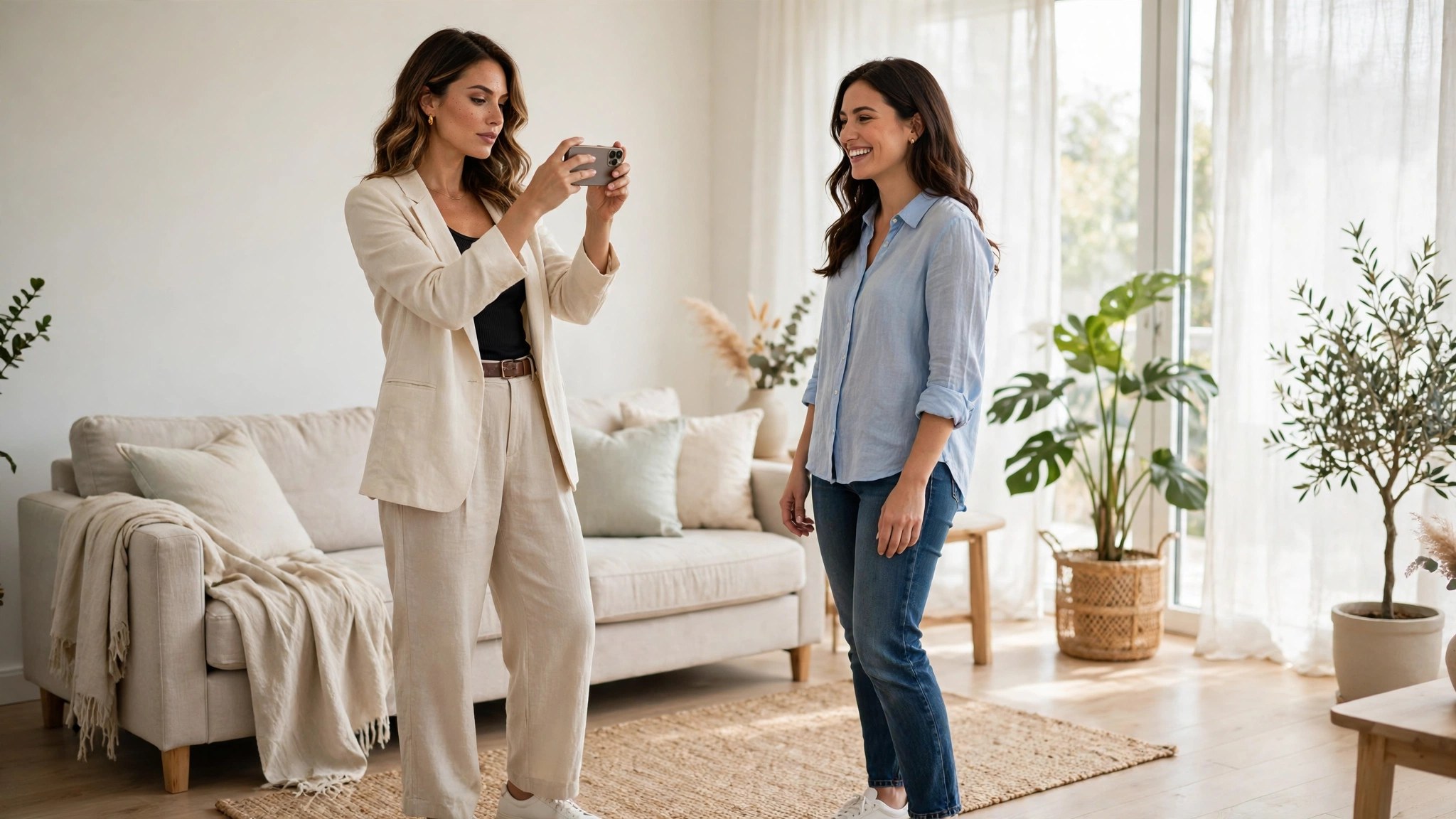
A scene is the same free image generator with a different job: not one face but a whole place. The prompt changes accordingly. Where a portrait prompt names a person, a scene prompt names a place and a mood: a room, a street, a beach at dusk, and the feeling the image should carry. The person in the scene is a part of the place, not the whole of it, and the prompt should say so.
Scenes are where the free tier shows its first real limit. One person in a scene is easy; two people interacting is harder, and three people doing different things is where the generator starts inventing anatomy. If your scene needs two people, give them one shared action — walking together, sitting side by side — and keep their bodies simple. If it needs a crowd, step back: a crowd at a distance is a pattern, and patterns are easy; a crowd up close is a dozen faces, and faces are hard.
4. Uppskalning: The Free Upscaler
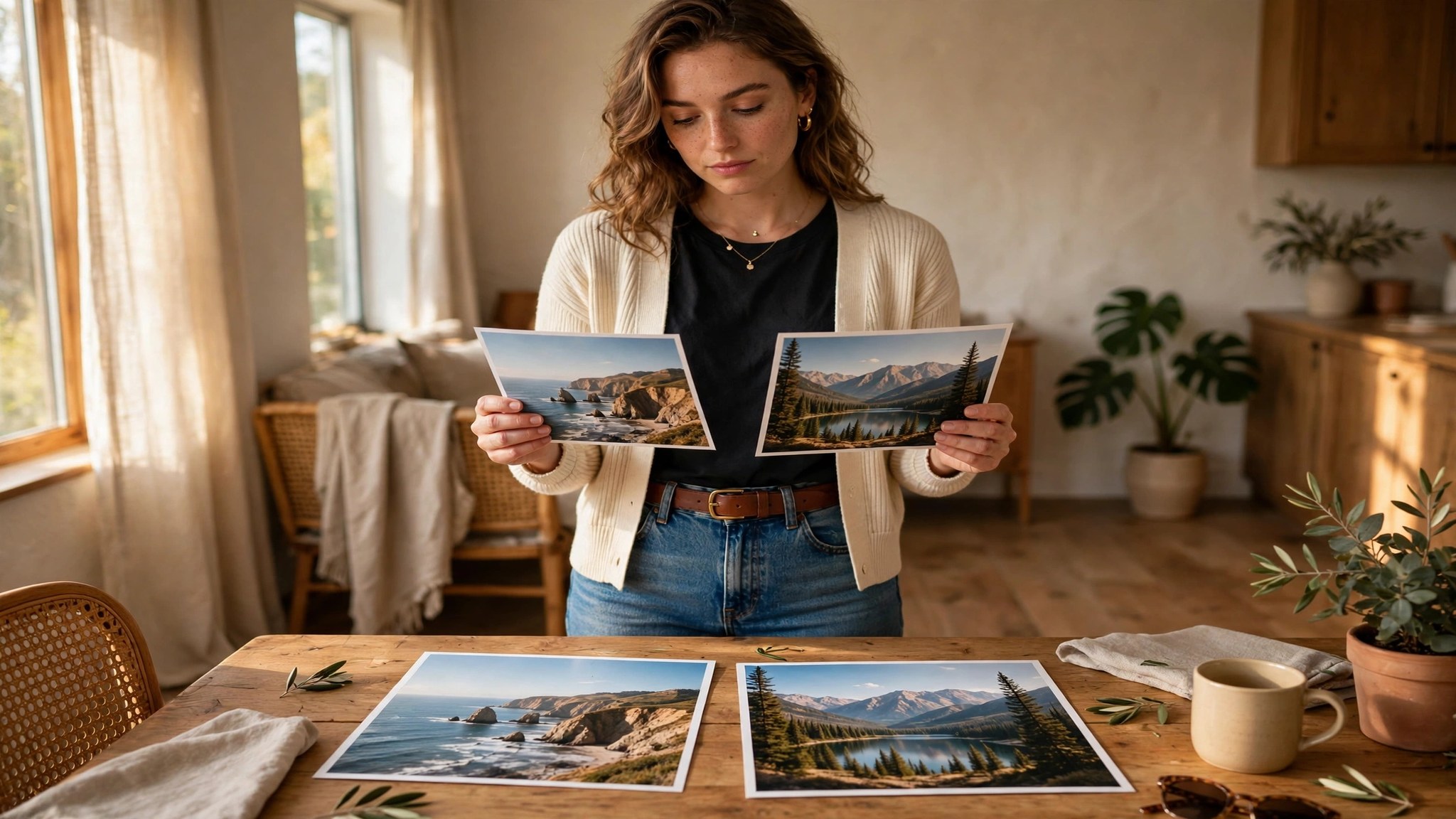
Upscaling is the most misunderstood free tool, because people expect it to add detail that was never there. It cannot. What the free upscaler does is take an image you already like and make it larger and sharper — clean edges, printable size, a version you can post without it falling apart. That is a real job, and it is the right job for the tool.
Use the upscaler on keepers, not on drafts. Upscaling a bad image gives you a larger bad image, and the time you spend enlarging a draft is time you could have spent generating a better one. The rule is simple: if the image is not worth keeping at its current size, it is not worth enlarging. Upscale the three keepers from the month, not the thirty drafts.
5. Face Swap: The Right Tool or No Tool
Face swap is the tool with the narrowest free job and the strictest rule. It does one thing: put one face onto one body, cleanly. When the source face is good — well lit, facing forward, high resolution — the swap works, and the free path is enough. When the source face is bad — dark, turned away, low resolution — no free tool will save it, and no paid tool will either. The source decides the result, and the swap only copies what you give it.
And the line that does not move: swap only faces you have the right to use — your own face, or a fictional face you generated. Swapping a real person’s face onto another body without their consent is the one use of this tool that is never acceptable, free or paid, and no guide that skips this sentence is honest.
6. When Free Runs Out
Free runs out in two ways, and only one of them is about money. The first is the obvious one: the task is bigger than the free tier. A long video, a huge enlargement, a batch of fifty images — these are paid jobs, and pretending they are free jobs is how people waste a week fighting a limit instead of paying a few dollars. The paid numbers are public and small: en standardbild är 6 credits, an image-to-image variant is 49 credits, a face swap is 26 credits, and the packs are $19.99 för 1,000 credits and $59.99 för 5,000 credits, both one-time payments with immediate credit. Priser kontrollerade 13 Nov 2026.
When you do pay, pay for the bottleneck, not for the whole workflow. If portraits are free and good, keep them free; pay only for the one thing free cannot do — the video, the big enlargement, the batch. A month where everything is free except one 49-credit variant costs $0.98 på den $19.99 paket och $0.59 på den $59.99 paket. That is the shape of a good free month: free everywhere it works, paid exactly where it does not.
7. What a Free Month Actually Costs
A free month costs nothing if the tasks fit the free paths, and the table below shows what the paid steps cost when they do not. All prices are the platform’s verified numbers — Prices checked 13 Nov 2026 — and the per-credit rates are $0.020 på den $19.99 paket (1,000 credits) och $0.012 på den $59.99 paket (5,000 credits).
A standard image is 6 credits: $0.12 på den $19.99 paket, $0.07 på den $59.99 paket. An image-to-image variant is 49 credits: $0.98 och $0.59. A face swap is 26 credits: $0.52 och $0.31. An undress is 21 credits: $0.42 och $0.25. A five-second video template is 351 credits: $7.02 och $4.21. An eight-second video template is 561 credits: $11.22 och $6.73.
Run the month through the table. Twenty free portraits, five free upscales, three free swaps, and one paid video: the month costs one video, 351 credits, or $7.02 på den $19.99 paket. The same month done entirely paid would cost the portraits (120 credits), the upscales, the swaps (78 credits), and the video — several hundred credits more, for the same images. The free tier is not a demo; it is the bulk of the work, and the paid step is the finishing touch.
8. Honest Limitations
The free tier’s biggest limitation is the one nobody lists: it rewards the easy and punishes the ambitious. Portraits are free and good; complex scenes with two people and a story are free and often bad. If your work is getting more ambitious, the free tier will feel smaller every month, and that is not a failure of the free tier — it is a sign that your work has outgrown it.
9. Who This Is For — and Who It Is Not For
This guide is for anyone who wants to make things without paying for the parts that are free. If you generate portraits, scener, and the occasional swap, and you are willing to match the task to the tool instead of fighting the tool, the free tier will carry most of your month. It is also for anyone who is learning: free is the cheapest school, and the lessons it teaches — prompt discipline, light matching, judging at full size — are the same lessons the paid tier teaches, without the bill.
It is not for anyone who needs volume. Fifty images a day, a batch of videos, a deadline tomorrow — that is paid work, and the free tier will not carry it no matter how cleverly you use it. It is also not for anyone who needs a guarantee: free tiers come with no promise that the tool will be there tomorrow, and a deadline that depends on a free tier is a deadline built on sand.
10. Consent and the Line You Do Not Cross
Everything in this guide assumes you are generating images of yourself, or of fictional adults you invented. That is the only safe ground. A free tool does not change the rule: swapping a real person’s face, undressing a real person’s photo, or generating a real person in a compromising scene without their consent is wrong at any price, and free makes it worse, not better, because free removes the last friction between the impulse and the act.
Free also tempts a second mistake: generating images of a real person “just to try the tool.” Trying is still generating, and the image exists once it is made. If the person is real, get their consent first, in words, before the generation — not after, when the image already exists and the damage is done. The free tier’s lack of friction is a feature for your own work and a hazard for anyone else’s.
11. Frequently Asked Questions
Is the free image generator on this site really free?
Ja, according to the homepage: free generation with no registration, ingen registrering, ingen e-post, ingen telefonverifiering, och inget kreditkort. That is the fact as stated on the homepage and checked for this guide. Free terms can change, so re-check the homepage before building a month’s plan on it.
Which free tool should I use for a portrait?
The free image generator. A portrait is its home ground: ett ansikte, one light, one subject. Name the person, the place, and the light in the prompt, judge the result at full size, and generate again rather than repairing a portrait that fails on the eyes or the hands.
Can the free upscaler fix a bad image?
Nej. It makes a good image larger and sharper; it cannot invent detail that was never there. Upscale keepers, not drafts — a larger bad image is still a bad image, and the time is better spent generating a better original.
When should I pay instead of using the free tier?
Pay for the bottleneck only: the one thing free cannot do well, such as a long video or a large batch. A five-second video template is 351 credits ($7.02 på den $19.99 paket), and a month where everything is free except one video costs exactly that. Paying for the whole workflow when only one step needs it is the most common waste.
What does a standard image cost if I do pay?
A standard text-to-image generation is 6 credits: $0.12 på den $19.99 paket (1,000 credits) och $0.07 på den $59.99 paket (5,000 credits). An image-to-image variant is 49 credits, a face swap is 26 credits, and an undress is 21 credits. Priser kontrollerade 13 Nov 2026.
Does the free tier work for video?
For short clips, ja, through the video generator — but video is the free tier’s thinnest path, and long scenes are paid work. A five-second video template is 351 credits and an eight-second template is 561 credits, so plan video as the month’s one paid step rather than its free default.
Keep Reading
- The Free Image That Looks Paid: Five Small Touches That Raise Quality for Free
- The Free Workflow: From First Image to Finished Set Without Spending a Credit
- The Free Library: Building a Reusable Image Set From Free Generations
Start with the AI-pornogenerator for portraits and scenes, use the AI-bilduppskalare for your keepers, and try the AI-ansiktsbyte (bild) when the source face matches. Den AI-porrverktyg page lists every tool in one place.