File Management & Naming Conventions for Free Users
Ever lost hours searching for a single document? It’s a common problem many face. Studies show people spend 2.5 hours daily looking for information. This time waste causes stress and lowers productivity.
By creating a robust and searchable digital library, you can save those lost hours. A smart ai porn file management free system keeps your files easily found. This way, you can access them quickly when needed.
This guide will show you how to organize your digital space. You’ll learn to set up a structure that fits your needs. Let’s turn your messy storage into a well-organized, efficient system.
Key Takeaways
- Understand the high cost of poor digital organization.
- Learn why naming conventions save you hours of search time.
- Discover how to build a scalable storage hierarchy.
- Implement automated tools to keep your library clean.
- Master the art of consistent folder labeling for long-term success.
The Importance of Organizing Your AI Media Library
Organizing your digital workspace is key to true creative freedom. High volumes of AI content can quickly turn your storage into chaos. A good file management free strategy keeps all your assets ready when you need them.
A well-organized system is the heart of your creative workflow. Clear naming helps reduce errors and confusion with many assets. This way, you avoid the frustration of losing files and can focus on creating.
Digital clutter grows fast without a plan, wasting space and slowing you down. File management free tools keep your space tidy. Here’s how organization changes your daily work:
| Feature | Unorganized Library | Organized Library |
|---|---|---|
| Search Time | Minutes to Hours | Seconds |
| File Duplication | High Risk | Minimal |
| Workflow Speed | Slow and Frustrating | Efficient and Fluid |
| System Maintenance | Reactive (Fixing issues) | Proactive (file management free) |
Investing time in organizing your library pays off big time. A streamlined digital environment saves time and mental energy. Start small today to build a strong foundation for your creative journey.
Establishing a Consistent Naming Scheme
You can turn your messy file collection into a neat digital library with a naming scheme. Without a plan, your files can become a confusing mess. A standard naming system helps keep each file organized and easy to find.
Being consistent is key to staying productive. By using the same rules for all files, you make finding them easier. Efficiency is not just about speed; it is about creating a system that works for you every single day.
Components of an Effective Filename
A good filename should summarize the content. Start with the date in the YYYYMMDD format to keep files in order. This simple step keeps your files sorted correctly.
Next, add a descriptive title that shows what the file is about. Skip generic names like “image1” or “test.” Use clear, concise keywords that describe the file’s main points. This makes your naming scheme easy to follow as your collection grows.
“The secret of getting ahead is getting started. Organization is the first step toward mastery.”
Handling Versioning and Iterations
Dealing with many versions of the same file can get messy without a clear plan. Always add a version number, like v01, v02, or final, to the filename. This helps you keep track of changes without losing your original work.
If you make lots of versions, use a simple suffix system. Keeping your naming scheme consistent across all versions makes your work easy to follow. This detail is crucial for a professional and growing library.
Setting Up Your Folder Hierarchy
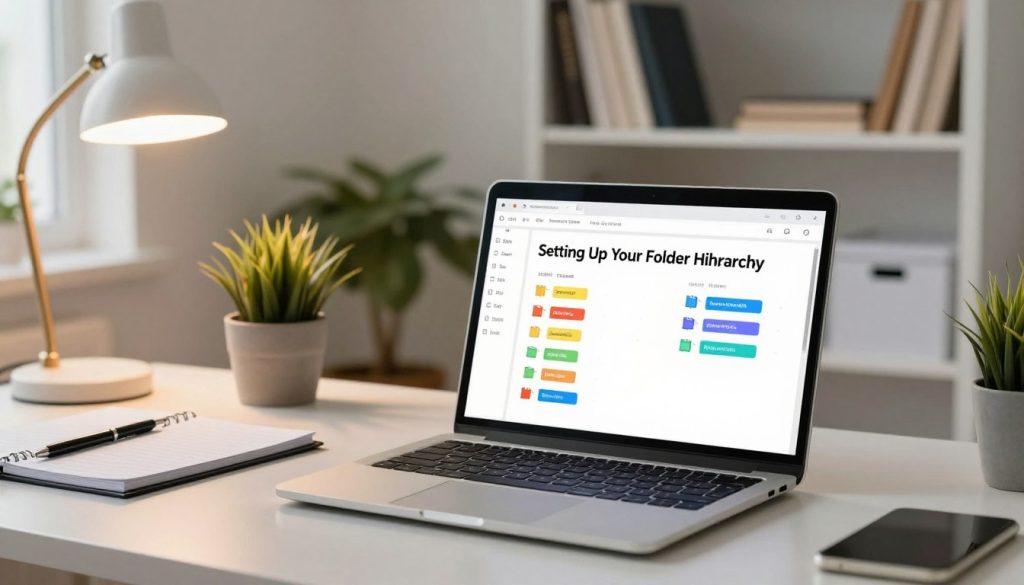
Turning a messy collection into a neat library is easy with a good folder hierarchy. This structure is like a essential map for your digital stuff. It makes finding and using your files quick and easy. Remember, the Windows API limits file paths to 255-260 characters. Staying within these limits helps keep your files easy to manage and access.
Categorizing by Subject and Style
Start organizing by grouping your assets by their main traits. Create main folders for broad subjects like themes, project types, or artistic styles. This logical grouping stops your main directory from getting too messy with too many files.
Then, make sub-folders to get even more specific. For example, you might sort files by lighting style, character type, or resolution. This way, finding specific assets is easy without getting lost in a sea of unrelated files.
Creating Chronological Archives
As your collection grows, your main workspace might get too full of old, unused files. Set up a chronological archive system to move these files out of the way. Use folders labeled by year or quarter to keep your current projects in focus while saving your history.
This method makes your active directory clean and boosts system speed. When you need to go back to an old project, just head to the right archive folder. This simple habit saves you a lot of time and eases the stress of managing a big digital library.
| Folder Level | Purpose | Naming Strategy | Example |
|---|---|---|---|
| Root | Primary Category | Subject-Based | /Portraits |
| Sub-Folder | Style/Theme | Descriptive | /Cinematic_Lighting |
| Archive | Historical Data | Date-Based | /2023_Q4_Archive |
Mastering AI Porn File Management Free with Local Tools
Managing your files for free is doable with the right tools. You don’t need to spend a lot on software to keep your digital collection tidy. Your computer’s built-in tools can help you keep your workspace organized and efficient.
Utilizing Windows File Explorer Features
Windows File Explorer is a powerful tool that’s often overlooked. You can change how files are displayed using the View tab. This makes it easier to spot specific files quickly.
The Group by and Sort by options help organize files by date, size, or type. This keeps your files in order.
The search bar in the top right corner is also useful. It lets you quickly find files using simple search terms. This saves a lot of time when you have many files.
Leveraging Free Open-Source File Managers
For more advanced needs, open-source file managers are a good choice. Tools like Double Commander or FreeCommander offer a dual-pane view. This makes moving and copying files faster.
These tools also have batch renaming and advanced filtering. They give you more control over your files. The table below shows the main differences to help you pick the right tool.
| Feature | Windows Explorer | Open-Source Manager |
|---|---|---|
| Interface | Single Pane | Dual Pane |
| Batch Renaming | Basic | Advanced/Customizable |
| Customization | Limited | High |
| Cost | Free (Built-in) | Free (Open-Source) |
Learning to use these tools ensures your ai porn file management free setup grows with your library. Whether you use Windows features or an open-source manager, staying consistent is key. Keeping your files organized improves your overall experience.
Implementing Metadata and Tagging Strategies
Metadata turns your files into a searchable database. Filenames help, but they’re not enough when you have many AI files. Adding extra info to your files makes searching easier and saves time.
“For every minute spent organizing, an hour is earned.”
Adding Custom Properties to Files
Start by using your computer’s built-in properties feature. Right-click a file and choose properties to add custom tags, comments, and ratings. This makes your media easy to find, even if you rename the file later.
Custom properties are like permanent labels for your files. They help when moving files between folders or cloud services. Keeping these labels consistent keeps your file organization in order, no matter where your files are.
Using Free Tagging Software
As your collection grows, manual tagging gets hard. That’s why you need special software. Tools like DigiKam or TagSpaces make managing metadata easy. They let you tag many files at once, speeding up your work.
These free tools offer features like visual previews and advanced filters. They help you sort your AI media by style, subject, or date quickly. This control is crucial for a well-organized digital archive.
Building a Scalable Asset Catalog
Creating a top-notch library needs more than basic folders. It requires a scalable design. As your collection grows, a reliable asset catalog is key to keep things running smoothly. Planning for growth ensures your system stays fast, even with thousands of files.
Choosing the Right Database Structure
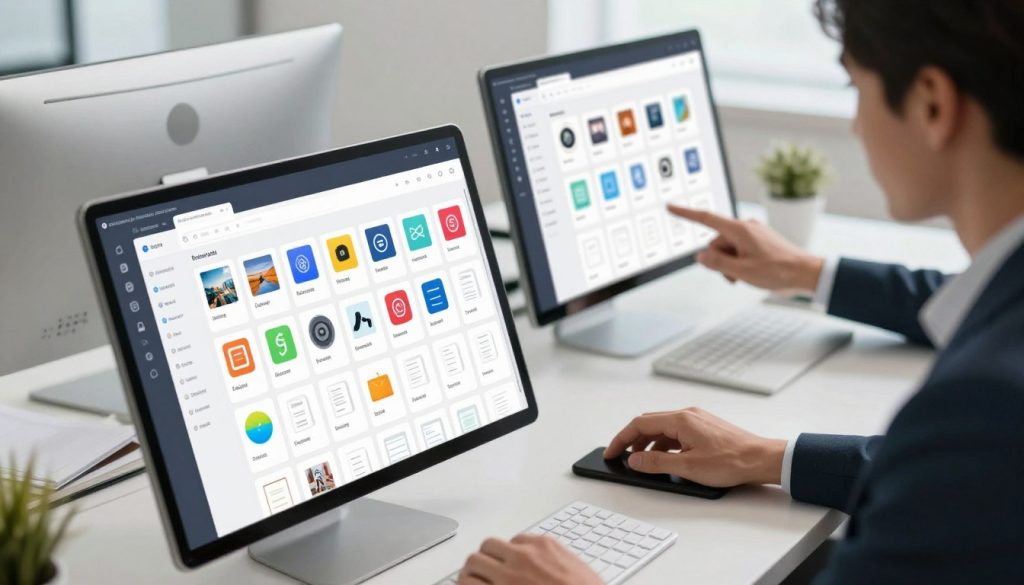
A good database structure is the heart of your media management. Instead of just using your computer’s file browser, use tools with a structured database. This makes it easy to search and organize your files.
When picking your structure, remember these key points:
- Relational mapping: Links files to categories or tags without copying the media.
- Centralized indexing: Lets your asset catalog find info quickly across drives.
- Flexibility: Allows adding new fields as your collection grows.
Maintaining Performance with Large Collections
Scanning thousands of files can slow down your system. A dedicated database structure avoids this lag. It makes your workflow fast by handling the heavy work for you.
To keep your asset catalog running well, follow these tips:
- Regularly optimize your database to remove unused entries.
- Store your database file on a fast SSD to speed up browsing.
- Control the number of processes scanning your media folders.
With these strategies, your asset catalog stays a powerful tool, not a slowdown. A forward-thinking approach to your database keeps your library fast, organized, and ready for more.
Automating Your Workflow with Batch Renaming
If you’re renaming hundreds of files one by one, it’s time to use batch processing. Manual updates are slow and often wrong, which can mess up your naming scheme. By automating these tasks, you make sure every file has a clear, logical name without needing to click over and over.
When you automate, watch out for file compatibility. Stay away from special characters like < > | [ ] & $ + \ / : * ? “ in your file names. These characters can cause problems when moving files between different systems or cloud storage.
Using Built-in OS Batch Tools
Both Windows and macOS have basic tools for renaming many files at once. On Windows, select files, press F2, and type a new name. The system will automatically add numbers to each file. This is a quick and effective way to organize a folder of images.
macOS users can use Finder’s “Rename” function by right-clicking on files. This tool lets you replace text, add prefixes, or format names with numbers. While these tools don’t have advanced features, they’re great for simple tasks.
Third-Party Free Batch Renaming Utilities
For more complex tasks, third-party software offers detailed control over your files. Tools like Bulk Rename Utility or Microsoft PowerToys PowerRename let you use regular expressions and metadata for your naming scheme. These tools are key when you need to sort thousands of files by date or tags.
The following table compares popular free tools to help you pick the right one for your needs:
| Tool Name | Platform | Best For | Complexity |
|---|---|---|---|
| Windows Rename | Windows | Basic sequential tasks | Low |
| macOS Finder | macOS | Quick batch updates | Low |
| Bulk Rename Utility | Windows | Advanced regex patterns | High |
| PowerToys | Windows | Search and replace | Medium |
Using these advanced tools keeps your naming scheme consistent as your collection grows. Setting up a batch rule saves you hours of manual work in the long run.
Managing Storage and Cloud Backups
A good plan for your media library mixes local storage with cloud syncing. Keeping your digital space clean means your files are safe and easy to find. A file management free strategy helps you grow your collection without losing performance or security.
Optimizing Local Storage Space
Your main storage drive can get messy with too many files or temporary data. Cleaning up regularly is key to a fast workflow. Finding and deleting files you don’t need is a big part of file management free.
Here are ways to keep your drive tidy:
- Delete duplicates: Tools can find and remove the same files, saving space.
- Compress archives: Store old projects in smaller folders to save space.
- Clear cache files: Clean out temporary files to free up space.
Free Cloud Syncing Solutions
After organizing your local files, you need a cloud backup. Cloud syncing keeps your data safe from hardware failures. Using a file management free cloud service means your files are always safe.
Many services offer free plans for personal use:
- Google Drive: It syncs well across devices and is easy to use.
- Microsoft OneDrive: It works well with Windows and backs up your files automatically.
- MEGA: It has strong encryption and lots of free storage for your files.
Combining local organization with cloud backup makes your files safe and organized. This two-step approach keeps your collection growing while staying secure.
Security and Privacy for Your Personal Collection
Building a large asset catalog means keeping your files private is crucial. You need to make sure your media stays safe from unauthorized access. Taking steps to protect your data is key to feeling secure while managing your digital library.
Encrypting Sensitive Folders
Encryption is like a digital safe for your private files. Tools like VeraCrypt or BitLocker can make your data unreadable without a password. This is a great way to keep your asset catalog safe from theft or hacking.
Creating an encrypted container for your most sensitive items is a good idea. Once it’s locked, even if someone gets your computer, they can’t see your files without your key. This extra layer of security is vital for anyone who cares about their digital privacy.
Managing Access Permissions
You can also control who sees your files by managing permissions. By adjusting security settings on your folders, you can limit access to certain users. This way, even if others use your computer, your private files stay hidden.
It’s smart to check these permissions often to make sure only the right people can access your folders. Keeping your asset catalog organized is important, but controlling access is just as crucial. The table below shows the best ways to protect your digital assets.
| Security Method | Primary Benefit | Ease of Use | Best For |
|---|---|---|---|
| Folder Encryption | Total Data Privacy | Moderate | Sensitive Assets |
| User Permissions | Access Control | High | Shared Computers |
| Cloud Vaults | Remote Security | High | Backup Protection |
Troubleshooting Common Organization Issues
Even the most well-planned digital libraries can face unexpected problems. If your system is slow or disorganized, start by triaging your legacy files. Focus on the 20% of files you use 80% of the time. This will help you work more efficiently.
By focusing on these key files, you can quickly get your system back in order. This approach helps you keep your most important media accessible while you fix deeper issues.
Handling Duplicate Files
Duplicate files cause storage problems and confusion in your naming scheme. These extra copies often come from batch transfers or cloud syncing mistakes. It’s hard to find the original file.
To fix this, follow these steps:
- Use checksum-based duplicate finders to spot files with the same data, no matter their name.
- Remove the extra copies right away to save space.
- Make sure your remaining files have the right naming scheme to avoid future mix-ups.
“Efficiency is doing things right; effectiveness is doing the right things.”
Recovering Corrupted Metadata
When metadata gets damaged, your files can’t be found by search tools. This breaks your organization. Even if your naming scheme is good, lost tags or properties make finding items hard.
Use special repair tools to check file headers for problems. If the metadata can’t be fixed, use automated tagging software to re-index your collection. This will bring back full search capabilities.
Consistency is the key to longevity. Regularly check your metadata to keep your library organized and useful.
Conclusion
Creating a reliable system for your files makes a messy folder into a valuable asset catalog. You get control over your digital world by using these simple habits for every new file or project.
Small changes in naming and storing your media lead to big results over time. Your future self will thank you for the effort in keeping things organized and safe. A well-kept asset catalog saves you hours of searching for specific items.
Begin using these strategies with your current projects. You’ll see your workflow get better and your digital space more organized right away. Keep improving your methods as your collection grows. This way, your library stays a valuable resource for years.
FAQ
Why is implementing a professional file management free strategy so important for my collection?
Employees spend 2.5 hours daily searching for information. A good organizational system saves time. It keeps your digital stuff easy to find and safe from clutter.
What is the most effective naming scheme for sorting files chronologically?
Use YYYYMMDD at the start of your file names. This makes your files easy to sort and find. It keeps your system organized, even with lots of files.
Are there specific limits I should be aware of when setting up my folder hierarchy in Microsoft Windows?
Yes, Windows has limits on file paths. Keep your folders simple to avoid errors. Use short names and archives to stay within limits.
Which characters should I avoid when using batch renaming tools?
Avoid special characters like < > | [ ] & $ + \ / : * ? “. Stick to letters, numbers, underscores, and hyphens. This keeps your files working on all devices.
How can metadata improve the searchability of my asset catalog?
Metadata adds extra info to your files. It lets you tag files for easy search. This is key for big collections.
What are the best ways to secure my personal media collection from unauthorized access?
Use VeraCrypt for folder encryption and Windows security settings for access control. Combine this with cloud backup for extra safety.
How do I efficiently handle a growing library that has become cluttered with duplicates?
Regularly clean up your files to save space. Focus on the most used ones. This keeps your system fast and organized, even with many files.