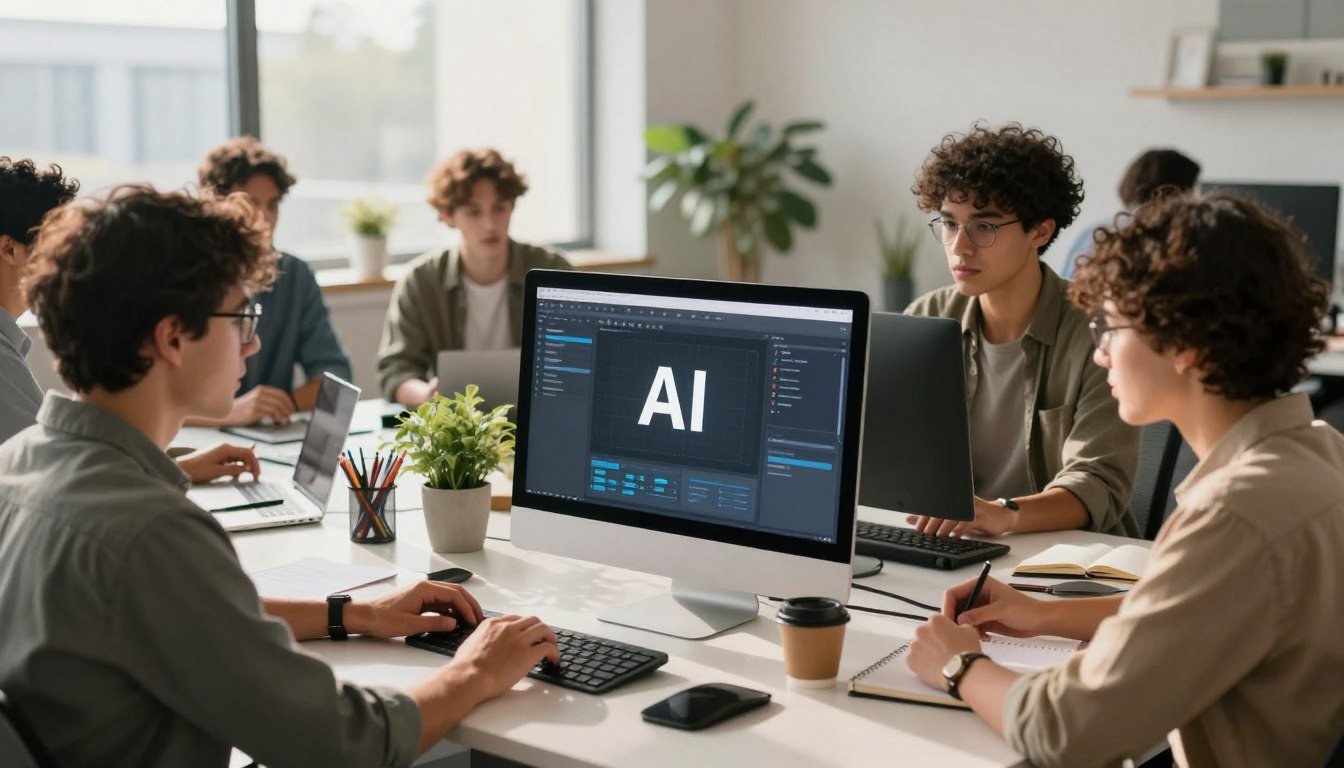
Onboarding Flow: Setting Up Your Free AI Porn Workspace
Ever thought about keeping your personal files safe while using powerful generative software? Many jump into ai porn onboarding without thinking about the risks to their main computer. Keeping your sensitive data safe is not just a good idea; it’s a critical necessity for creators.
To keep your space safe, always use a separate machine for your projects. This free method stops software errors from harming your personal files or system. By keeping your workspace separate, you make sure your hardware can handle the tough tasks of local model generation. Getting this onboarding right is key to a smooth and safe creative journey.
Key Takeaways
- Always isolate your generation tasks on a dedicated machine to protect personal data.
- Avoid running intensive models on your primary computer to prevent system instability.
- Security is the most important step when starting your creative workspace.
- Proper hardware preparation ensures your system can handle complex model demands.
- Following these steps creates a professional and safe environment for your projects.
Understanding the AI Porn Onboarding Free Process
Learning the onboarding free process is key to a top-notch AI workspace. It sets up a solid base for your creative work. This way, your projects stay organized and run smoothly from start to finish.
Defining Your Creative Goals
Creating an AI agent means defining specific roles and identities for it to work well. You need to decide on the look and characters you want to create before you start. This helps you pick the right tools for your project.
Knowing what you want to achieve makes the ai porn onboarding free process easier. You can focus on tools that match your vision. This makes your work more efficient and enjoyable.
Assessing Hardware and Software Requirements
Checking your hardware is crucial to handle the computational load of creating high-quality images. Make sure your graphics card has enough VRAM. This prevents your system from crashing while working on complex images.
It’s also important to check if your software can run the latest AI tools. Make sure your operating system supports the needed Python environments and Git repositories. Doing this upfront saves you from headaches later on.
Selecting Your Free AI Image Generation Tools
Starting your journey with AI imagery means choosing the right tools. It’s important to find a balance between quality and cost. You need to decide if your computer can handle the task or if you need to use remote computing.
Exploring Stable Diffusion WebUI
The Stable Diffusion WebUI, also known as Automatic1111, is a top choice for local image creation. It offers a comprehensive interface for controlling the image-making process. This way, your data stays private, as it doesn’t leave your computer.
But, it needs a strong GPU with lots of VRAM. If your computer isn’t up to the task, consider using a VPS. This keeps your computer safe and stable during long sessions.
Utilizing Google Colab for Cloud Processing
Google Colab is great for those without a dedicated graphics card. It uses cloud-based GPUs, so you don’t need expensive hardware. This makes it easy to start creating right away.
But, cloud services have limits. Watch your session time to avoid being cut off. Many find this onboarding free method the easiest way to try out AI.
Comparing Free Model Hosting Platforms
Choosing where to find your models is crucial. Sites like Civitai and Hugging Face offer thousands of models. These platforms are key to the AI art community, helping you improve your style.
The table below shows the main differences between hosting and processing environments. It helps you choose the best option for you:
| Platform Type | Best For | Hardware Needs | Privacy Level |
|---|---|---|---|
| Local WebUI | Power Users | High (GPU Required) | Maximum |
| Google Colab | Beginners | None (Cloud) | Moderate |
| Dedicated VPS | Advanced/Pro | Remote | High |
Always check the terms of service for any platform. This ensures your work is safe. By picking the right tools, you build a workflow that grows with your skills.
Configuring Your Local or Cloud Lab Setup
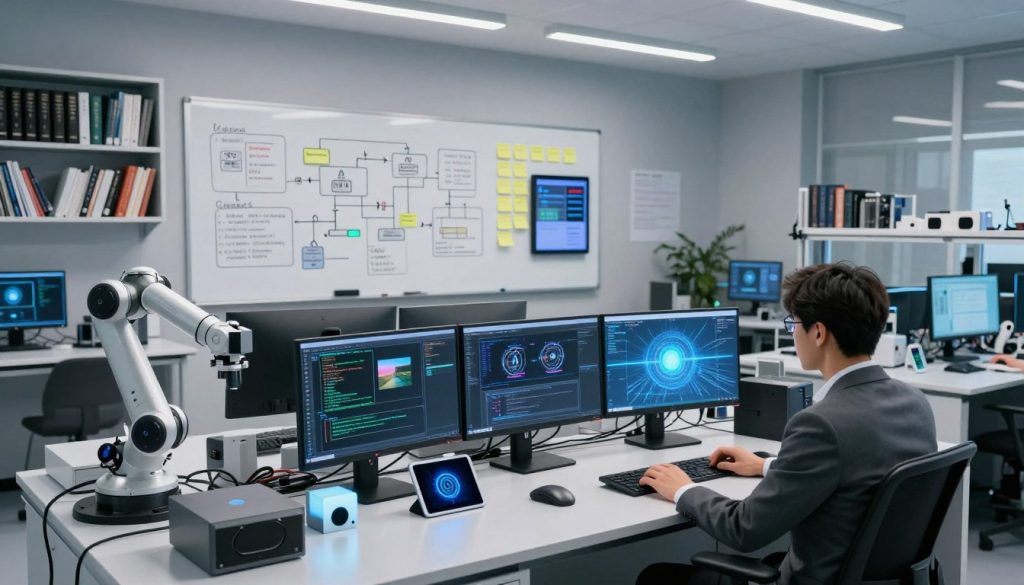
Setting up a stable lab setup is key to a smooth onboarding free experience. A good setup means your hardware and software work well together. This prevents crashes when you’re working on complex tasks.
Installing Python and Git Environments
You need to get your operating system ready with the right tools. Python is essential for most AI scripts. Git helps you update your software and clone repositories.
For local setups, you might need extra packages for compatibility. Node.js and Xcode (for macOS users) are often needed. Make sure your system PATH is set up right to avoid errors.
Setting Up Automatic1111 or ComfyUI
After setting up your environment, pick an interface to work with your models. Automatic1111 is popular for its easy-to-use dashboard. ComfyUI is great for those who like detailed control.
“The best interface is the one that allows you to translate your creative vision into reality without fighting the software.”
You can use these interfaces on your GPU or in the cloud. Make sure your lab setup has enough VRAM for high-quality image generation.
Managing Dependencies and Extensions
Keeping your workspace tidy is important. Extensions add features like custom samplers and upscalers. They let you explore more creative options.
To keep things running smoothly, follow these tips:
- Update regularly: Look for updates to fix bugs and boost performance.
- Isolate environments: Use virtual environments to avoid conflicts between projects.
- Clean up: Remove unused extensions to speed up startup and save memory.
By staying organized, your onboarding free journey will stay productive. A clean workspace is the key to making consistent, high-quality AI content.
Mastering the User Journey for Content Creation
Mastering the user journey is key to unlocking your creative potential in AI image generation. By streamlining your interaction with the software, you turn raw inputs into stunning visuals. This journey needs patience and a clear grasp of your digital space.
Navigating the Interface for First-Time Users
When you first open your AI workspace, it might feel overwhelming. Most interfaces organize tools by function. This means generation settings are on the left, and output previews are on the right. Efficiency comes from keeping your most-used settings handy.
Take time to explore the main dashboard before starting. Knowing the layout makes your user journey smooth, not frustrating. Developing consistent navigation habits saves time during long creative sessions.
Understanding Prompt Engineering Basics
Prompt engineering is about clearly telling the AI what you want. Start with a clear subject, then add descriptive modifiers for lighting, style, and composition. Precision in your language ensures the model gets your vision right.
Remember to use negative prompts to exclude unwanted elements. This improves your image quality. This process is crucial as you learn to communicate with the model.
Adjusting Sampling Steps and CFG Scales
Sampling steps control how many times the AI refines the image. Higher values mean more detail but take longer. Finding the right balance is key for a productive workflow.
The CFG scale affects how closely the AI follows your prompt. A lower scale offers more freedom, while a higher scale keeps it strict. Use the table below to guide your initial experiments.
| Setting | Low Value | High Value | Recommended |
|---|---|---|---|
| Sampling Steps | 15-20 (Fast) | 40-50 (Detailed) | 25-30 |
| CFG Scale | 3-5 (Creative) | 10-15 (Strict) | 7-8 |
| Batch Count | 1 (Testing) | 4+ (Production) | 2 |
Adjusting these parameters is crucial for mastering your user journey. Experimenting with these values helps you achieve your desired aesthetic. Every adjustment refines your unique style.
Sourcing and Training Custom Models
To get top-notch results in your AI workflow, you need more than basic models. Using custom assets lets you control the look and feel of your images. Consistency is key, and it comes from a well-chosen set of files.
Downloading Checkpoints from Civitai
Civitai is the go-to place for community-trained checkpoints. These files set the style, lighting, and subject of your images. Look for models with high ratings and clear images to ensure quality.
Be careful when downloading from outside sources. Keep your AI assets in a dedicated folder and use strong passwords. Security is crucial as you grow your collection.
Implementing LoRA for Character Consistency
Low-Rank Adaptation, or LoRA, helps keep characters consistent. It’s a small file that adds specific features to your images. This way, you can change scenes without altering the character’s look.
Start by testing LoRA at different weights. A weight of 0.7 to 0.8 works well for balancing likeness and flexibility. If the character looks off, try lowering the weight or tweaking your prompt.
Managing VAEs and Embeddings
Variational Autoencoders (VAEs) and Textual Inversions (Embeddings) complete the picture. VAEs make sure your images are colorful and clear. Keep a few high-quality VAEs ready to use with different checkpoints.
Embeddings simplify complex prompts. They help the AI grasp specific styles or qualities quickly. Keeping them organized saves time during your creative work.
| Asset Type | Primary Function | Best Use Case |
|---|---|---|
| Checkpoint | Defines base style | Setting the overall theme |
| LoRA | Adds specific details | Character consistency |
| VAE | Corrects color output | Improving image clarity |
| Embedding | Simplifies prompting | Style or quality control |
Optimizing Your Workflow for Efficiency
Efficiency is key to keeping up with a high-volume AI workspace without getting tired. By improving your technical setup, you can turn a slow process into a streamlined production engine. This change lets you focus more on your creative ideas, not just technical details.
Batch Processing and Image Upscaling
Creating images one by one is hard when you need many. Use batch processing to send dozens of prompts at once. This keeps your hardware busy while you do other things.
After making images, upscaling is crucial for quality. High-resolution images are needed for final projects. Using upscaling models keeps details sharp while making images bigger. Automating this step saves a lot of time compared to doing it manually.
Utilizing ControlNet for Pose Precision
Getting the exact pose you want can be tough with text prompts alone. ControlNet helps by giving precise structural guidance. It uses depth maps and skeletons to control character placement.
This tool makes it easy to avoid redoing images for the right pose. You can save and reuse your favorite poses. Precision is the key to saving time and making sure your characters look right.
Automating Repetitive Tasks with Scripts
Custom scripts are great for saving time in an AI world. You can write Python scripts for tasks like renaming files or organizing folders. These small changes make your daily work easier.
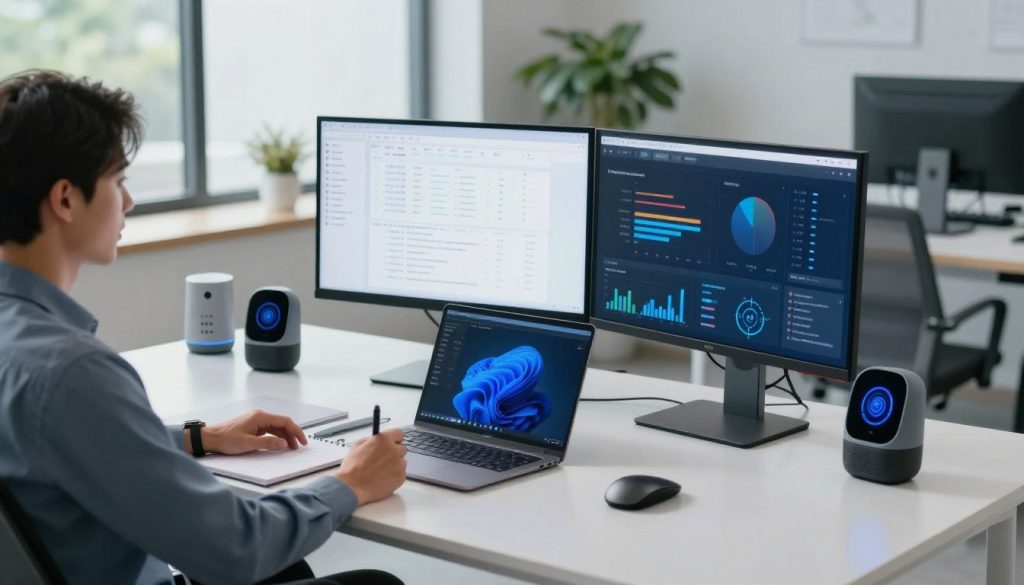
Also, using multimodal communication can help in your research. For example, you can use voice notes for ideas or notes. Staying organized through automation helps your work grow as your project does.
Ensuring Privacy and Security in Your Workspace
Creating a secure lab setup means focusing on privacy and data handling. When using AI tools, you give them access to your hardware and files. It’s important to take steps to keep your work private and safe from threats.
Managing Local File Storage Safely
Keep your AI project files separate from your main system folders. Use a dedicated partition or folder to avoid mixing personal and project data. Make sure your AI software can’t write to important system files or your personal data.
Check your storage folders often to keep your space clean and safe. If you find files you didn’t create, look into it right away. A tidy workspace helps you notice any unauthorized changes.
Understanding Terms of Service for Free Platforms
Free AI platforms often have legal agreements that might claim your work. Always read the terms of service before uploading data or linking accounts. Know if your work is used to train models or stored on servers.
If a platform asks for too much, choose a different tool that respects your privacy. Opt for local-first processing to keep your data on your machine, not in the cloud.
| Security Feature | Risk Level | Action Required |
|---|---|---|
| Local Storage | Low | Encrypt sensitive folders |
| Cloud Permissions | High | Restrict access scopes |
| Model Downloads | Medium | Scan files for malware |
Protecting Your Digital Identity
Your digital identity is precious and needs constant care. When setting up your lab setup, don’t use personal emails or accounts for AI services. Use a separate, anonymous account to keep your work and personal life separate.
Be careful with permissions; always limit what AI tools can access. If they ask for too much, like your contacts or social media, say no. Being cautious makes exploring AI safe and enjoyable.
Troubleshooting Common Technical Hurdles
When your system hits a wall, knowing how to diagnose the issue is key. A stable lab setup needs patience and a careful problem-solving approach. Most technical obstacles can be fixed with the right adjustments.
Resolving Out-of-Memory Errors
Out-of-memory errors are common when working with high-resolution image generation. They happen when your GPU runs out of VRAM. You can often fix this by reducing your batch size or lowering the resolution of your initial output.
If the problem doesn’t go away, try enabling optimization flags like xformers or medvram. These settings help manage memory better. This lets your lab setup handle larger models without crashing. Always check your task manager to see memory usage during peak times.
Fixing Broken Dependencies and Path Issues
Software environments can become unstable if dependencies are missing or if file paths are wrong. If your interface won’t launch, first check your Python environment. Make sure all required libraries are installed. Re-running your installation scripts often fixes these issues.
Path issues often come up when moving folders or updating your operating system. Make sure your environment variables point to the right directories. Keeping your file structure clean and organized helps avoid these technical bottlenecks.
Updating Models and Extensions Regularly
The AI world changes fast, and keeping your tools up-to-date is crucial. Regularly updating your extensions gives you the latest features and security patches. An outdated lab setup might run into compatibility issues with newer model checkpoints.
Make time each week to check for updates in your interface. Regular updates keep your workflow running smoothly. Proactive maintenance is key to keeping your creative projects going without a hitch.
Scaling Your AI Content Production
To grow your AI content, move from trial and error to a well-organized process. As you improve your user journey, you’ll see that making lots of content needs more than just ideas. You need systems for quick, consistent, and growing content.
Organizing Your Asset Library
Handling many files can be hard without a good system. Use a standardized naming convention that includes model version, seed number, and prompt details. This makes finding top assets easy for future designs.
Think about using database software or asset management tools to tag your images. This way, you can find files faster and spend more time creating. A tidy workspace is key for a smooth user journey.
Developing a Consistent Artistic Style
Being consistent is key for a professional look. Use fixed LoRA weights and specific negative prompts to keep your style the same. These tools help your characters and scenes look the same, no matter the scene.
Try using the same seed ranges for similar looks. When you find a style your audience likes, note down the settings. This lets you keep your look consistent and recognizable over time.
Transitioning from Static Images to Video Generation
Once you’re good at making static images, try adding motion. Tools like AnimateDiff or Deforum can bring your designs to life. This adds a new level to your user journey, keeping viewers interested with moving content.
Begin by adding motion to your top static prompts. The rules of composition and lighting still apply, even with movement. Use the table below to see the differences between stages.
| Production Stage | Primary Focus | Key Tool | Complexity |
|---|---|---|---|
| Static Generation | Composition | Automatic1111 | Low |
| Batch Processing | Efficiency | Scripts/API | Medium |
| Video Synthesis | Motion/Flow | AnimateDiff | High |
Conclusion
Building a strong AI workspace takes time and a dedication to learning. You now know how to set up your space and handle complex creative tasks.
Your path in digital artistry grows as you try out new models from Civitai. Improving your prompt skills is key. Regular use of tools like Automatic1111 or ComfyUI helps you overcome challenges.
Keep an eye on new trends in AI art. Trying out different LoRA settings and upscaling methods makes your work stand out.
It’s important to protect your online identity as you grow. Always update your software and keep your files organized. This helps you succeed in your creative work for a long time.
Don’t be afraid to share your work with others. This way, you can learn from fellow artists. Your unique style will grow as you explore what your AI setup can do.
FAQ
Why is an isolated environment recommended for your initial lab setup?
Creating a separate space for your AI tools is key to keeping your data safe. It helps avoid problems with software or files. This way, your main computer and important files stay protected.
What are the primary hardware requirements for a smooth onboarding free experience?
For a smooth start, you need a computer with an NVIDIA GPU and at least 8GB VRAM. This setup helps your system handle big tasks without slowing down.
How does the user journey evolve from first-time installation to expert generation?
Starting with tools like Automatic1111 or ComfyUI, you learn the basics. Then, you move to more complex tasks. This includes adjusting settings and using ControlNet for detailed image control.
Can I run these AI tools if my local computer isn’t powerful enough?
Yes, if your computer isn’t strong enough, use cloud services like Google Colab. This way, you can access powerful GPUs online. It keeps your computer running smoothly without needing expensive upgrades.
Where should I source high-quality models and checkpoints?
For top-notch models, check out Civitai. It’s a go-to for creators. They use it to download special files for unique styles and consistent looks.
How can I resolve common "Out-of-Memory" errors during image generation?
To fix memory issues, try reducing the batch size or using tools for high-resolution images. Adjusting your setup to use memory-efficient layers also helps.
What is the benefit of using LoRA in my creative workflow?
LoRA helps keep your work consistent by using small, efficient models. It’s great for maintaining specific styles or details without retraining big models.
Is my data safe when using free AI hosting platforms?
Free tiers on platforms like Hugging Face or Google Colab are safe if you read the terms. Always protect your data and identity when using AI tools.
How do I transition from generating static images to AI-generated video?
Start by mastering image generation. Then, explore tools like AnimateDiff or Deforum for video. Organize your assets and apply your style to videos for consistent output.
Why is it important to keep Python and Git environments updated?
Keeping your tools up-to-date avoids problems and ensures they work with new models. Regular updates keep your setup stable and efficient.