Instant AI Porn Render Tricks: Getting 0.4‑Second Turnarounds
Ever thought about making high-quality media in just a blink? Getting a 0.4-second turnaround is now possible, even for those without big budgets.
Modern tools and infrastructure can help you work faster. Sites like VidAU use efficient methods to speed up your creative work.
This breakthrough in tech helps you stay ahead while saving money. You can start at just 0.4 USD per video. This way, you can make more without losing quality. Efficiency is key to quick production.
Key Takeaways
- Achieve sub-second generation speeds using optimized infrastructure.
- Utilize platforms like VidAU for cost-effective production.
- Maintain high visual standards while increasing your total output.
- Benefit from a floor price of 0.4 USD per generated video.
- Understand the core requirements for rapid digital content creation.
Optimizing Hardware for Instant AI Porn Render Performance
To get an instant ai porn render, you need more than a top-notch graphics card. Your system must have all parts working together to cut down on delays. A strong foundation means you can handle tough tasks without slowdowns.
Selecting the Right GPU Architecture
Your setup’s heart should be an NVIDIA GPU with modern Tensor cores. These cores are essential for speeding up the complex math needed by AI models. Opt for the Ada Lovelace series for the best performance.
Look for GPUs with lots of CUDA cores for better parallel processing. A strong GPU is key for quick, high-quality image creation.
Maximizing VRAM Throughput and Memory Bandwidth
VRAM is important, but memory bandwidth is the real challenge. GDDR6X memory lets your system quickly move data into the GPU cache. This is crucial for fast image creation.
A narrow memory bus can slow down your GPU. Optimizing memory throughput keeps your system running smoothly, avoiding the delays that ruin the experience.
Cooling Solutions to Prevent Thermal Throttling
Rendering creates a lot of heat, which can slow down your GPU if not cooled. When it gets too hot, your GPU slows down to protect itself. This makes your render times much longer. Consistent performance means keeping your hardware cool.
Getting a high-airflow case or custom cooling is wise for heavy users. Stable temperatures mean your system performs well, no matter how long you use it.
Software Stack Configuration for Latency Under 0.5s
To get latency under 0.5s, you need more than just fast hardware. You also need a well-optimized software setup. The way your software talks to the GPU is key. Saving every millisecond makes your experience smoother and more real-time.
Choosing the Optimal Inference Engine
The inference engine is the core of your rendering pipeline. Standard frameworks can slow things down. So, picking a specialized engine is crucial for fast instant ai porn render work.
- TensorRT: Great for NVIDIA users to boost speed.
- ONNX Runtime: Good for working across different platforms quickly.
- OpenVINO: Ideal for certain CPU-GPU setups.
“Efficiency in the inference layer is not just about speed; it is about removing the unnecessary layers that sit between your prompt and the final pixel output.”
Streamlining Drivers and CUDA Environments
Your drivers are like translators between your software and the GPU. Old drivers can cause tiny delays that ruin your goal of latency under 0.5s. Always use the latest NVIDIA Game Ready or Studio drivers for the best performance.
Also, tweaking your CUDA environment is key. By setting specific flags, you can make sure your system focuses on your rendering tasks. This stops it from moving data between the GPU and slower system RAM.
Reducing Background Process Overhead
Even the most powerful computers can struggle if other apps are using CPU resources. For a truly instant ai porn render, you need a clean system. Close unused browser tabs, turn off cloud syncing, and stop background updates before starting.
Think about using a dedicated user profile or a lightweight OS just for rendering. Fewer active processes mean your GPU gets all the system resources it needs without any distractions.
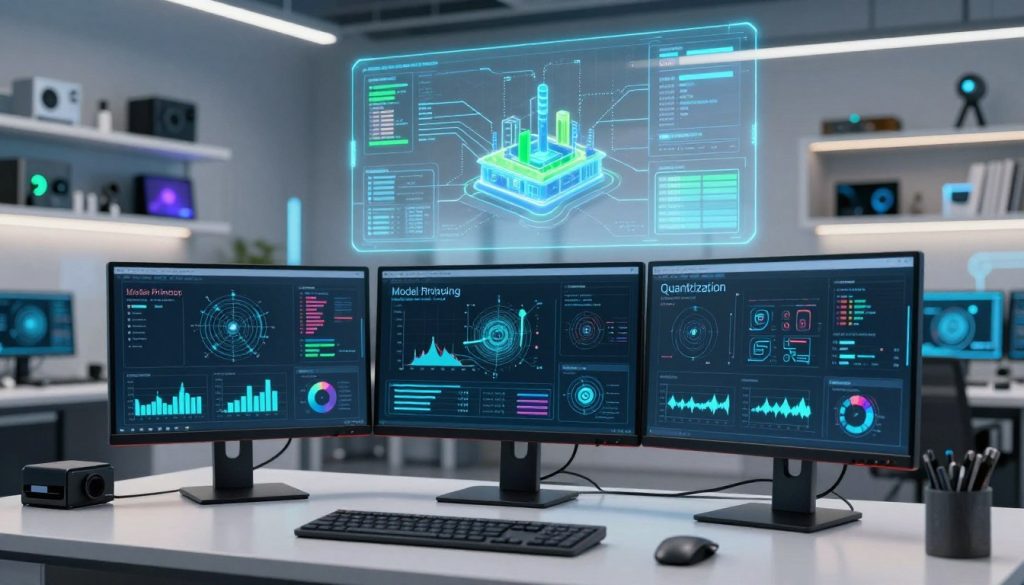
Model Pruning and Quantization Techniques
Optimizing your AI models is key to a fast instant ai render. By making your files lighter, your hardware can process data quicker. This keeps your system fast, even when it’s busy.
Implementing FP8 and INT8 Quantization
Quantization changes high-precision weights into smaller formats like FP8 or INT8. This makes your models use less memory. You’ll see your GPU work better with these smaller data structures.
“Efficiency is doing better what is already being done.”
Switching to these formats cuts down on data movement time. This is key for a smooth instant ai render in your work.
Using Distilled Models for Faster Inference
Distilled models are smartly made to be fast and still look great. They’re like smaller versions of bigger models. They keep the important stuff and skip the extra.
Adding distilled models to your workflow makes things faster. They’re perfect for those who want speed without losing quality.
Stripping Unnecessary Layers from Checkpoints
Many pre-trained models have extra layers you don’t need. You can remove these to make your model leaner. This gets rid of the slow parts.
After removing these layers, your model works better. It’s more efficient and easier to handle. This ensures your hardware focuses on what’s important for your instant ai render projects.
Leveraging GPU Burst and Caching Strategies
To get a 0.4-second turnaround, you need more than just power. You also need smart resource management. When you push your hardware hard, it must handle sudden spikes well. By learning these strategies, you can keep your instant ai render smooth, even when it’s busy.
Understanding GPU Burst Capabilities
A gpu burst lets your hardware go faster for a short time. This is key for handling sudden, big rendering jobs. It keeps your work flowing smoothly.
“Efficiency is doing better what is already being done.”
Implementing Persistent VRAM Caching
Persistent VRAM caching cuts down on wait times. Instead of loading assets every time, you keep them in your GPU memory. This proactive approach means your data is always ready for the next task.
- Pre-load core assets to cut down on startup delays.
- Use fast memory buffers for temporary data.
- Clear cache often to avoid memory problems.
Managing Batch Sizes for Single-Image Speed
Many think bigger batches mean better performance. But for instant ai render, smaller batches are better. They reduce wait times. Aim for a balance that keeps your GPU busy without delays.
Focus on single-image speed to respond quickly to users. With batch sizes of one or two, each request gets full gpu burst attention. This cuts down latency and keeps your output fast.
Prompt Engineering for Faster Generation
To get an instant ai render, how well your model understands your instructions matters. Making your input clearer helps your hardware work less hard. This means you get your results faster.
Simplifying Token Sequences for Rapid Processing
How you write your prompts affects how fast the model works. Long, complicated sentences slow things down. They make the system spend time on details it doesn’t need.
Use short, key words instead of long sentences. This way, the model only looks at what’s important. You get your instant ai render quicker.
Utilizing LoRA Adapters for Efficiency
LoRA (Low-Rank Adaptation) adapters help keep your system efficient. They let you add specific styles or subjects to your base model without loading huge files.
They use less VRAM and processing power. This makes them great for those who need speed. With these adapters, you get top-notch results with less work for your computer.
Minimizing Sampling Steps Without Quality Loss
Many people use high sampling counts, but it’s not always the best choice. You can get great results with fewer steps by picking the right tools.
Try using fewer steps to find the best mix for your work. Cutting down on steps is a key way to keep your instant ai render fast without losing quality.
Advanced Pipeline Optimization
To get a smooth rendering flow, you need more than just fast hardware. You must make sure your software works together well. This means making data flow smoothly through your system to avoid slowdowns.
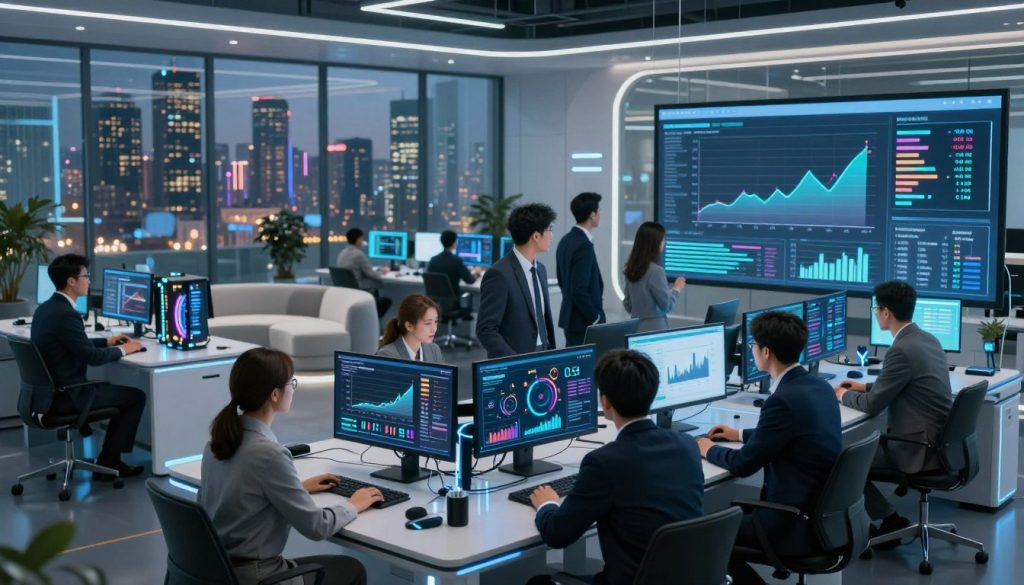
Asynchronous Processing Workflows
Asynchronous workflows keep your GPU busy without waiting for other tasks. They let your system get ready for the next frame while the current one is still being worked on. This parallel execution means your hardware is always working during generation.
Reducing Latency in Image Post-Processing
Post-processing can slow down your generation time. To keep latency under 0.5s, move tasks like color correction and upscaling to background threads. This keeps the main pipeline free for the initial render.
Running these tasks in the background keeps things smooth for the user. Efficiency is the key to fast output without losing image quality.
Automating Asset Loading and Unloading
Managing assets by hand is slow and error-prone. Automating asset loading and unloading makes sure your VRAM is used wisely. A smart cache manager can guess which assets you’ll need next and load them ahead of time.
This smart approach stops your system from slowing down when switching tasks. A well-automated pipeline is the best way to keep latency under 0.5s all session long.
Network and Local Server Latency Reduction
To get a latency under 0.5s, you need more than a fast GPU. You also need a smooth data path. Even top-notch hardware can slow down if network and server communication aren’t perfect. Make sure every millisecond is used wisely by removing any unnecessary delays.
Optimizing Local API Communication
Local API communication can slow you down, even with the best hardware. Cutting down on data transfer lets your system get instructions quickly. Keeping data flow smooth is crucial for efficiency.
Try using lightweight protocols or direct socket connections to skip HTTP overhead. This makes your API calls faster, helping you keep latency under 0.5s during busy times. Your hardware will render images faster, not wait for requests.
Reducing Overhead in WebUI Interfaces
Your control panel should be as quick as your rendering engine. Many WebUIs are slow due to heavy JavaScript or too many DOM updates. You can speed things up by turning off unnecessary previews or using simpler themes.
“Simplicity is the ultimate sophistication in engineering, especially when every fraction of a second determines the success of your output.”
Removing extra UI elements saves CPU time for image processing. A clean interface keeps your interaction smooth. This is key for a latency under 0.5s while handling complex tasks.
Bypassing Bottlenecks in Data Transfer
Transferring big image files can slow you down. Use local storage or fast NVMe drives for temporary assets. This avoids waiting for slow disk I/O or network issues.
Having a local cache for often-used models and assets cuts down transfer times. By removing these bottlenecks, data moves quickly. Pay attention to these details for top-notch rendering speed.
Safety and Ethical Considerations in High-Speed Rendering
When you push your hardware to its limits, balance is key. Fast output is exciting, but safety comes first. This ensures your digital and physical assets stay safe.
Managing Resource Usage Responsibly
High-speed rendering can cause a gpu burst, leading to sudden power spikes. Make sure your power supply unit (PSU) can handle these spikes. Responsible management means setting power limits to avoid system crashes.
Use software to control frame rates and processes. This prevents overloading and keeps your workflow smooth. Efficient use of resources reduces crash risks.
Ensuring Content Compliance and Security
Ethical rendering is crucial for professional AI work. All content must follow legal and platform rules. Protecting your projects from unauthorized access is also key.
Keep backups of your data to avoid loss during errors. Use encrypted storage to keep your work private. Staying compliant builds your reputation in the AI field.
Maintaining Hardware Longevity Under High Loads
Using gpu burst often wears out your components faster. Good cooling and regular maintenance are essential. Dust and poor airflow harm high-performance systems.
Keep your fans and heat sinks clean. Monitor temperatures to avoid overheating. The table below shows how to keep your hardware in good shape.
| Maintenance Task | Frequency | Primary Benefit |
|---|---|---|
| Dust Removal | Monthly | Prevents Overheating |
| Thermal Paste Check | Annually | Optimizes Heat Transfer |
| Driver Updates | Quarterly | Improves Efficiency |
| Voltage Monitoring | Weekly | Ensures Component Safety |
Conclusion
To get 0.4-second turnarounds, you need to fine-tune your hardware and software. You now have the tools to make your rendering pipeline as fast as it can go.
Your success depends on managing your system’s resources well. Using a gpu burst strategy helps your hardware handle sudden workloads smoothly. This keeps your work flowing fast and your output high.
It’s crucial to watch your system’s temperature and memory use closely. Regular tests help keep your settings perfect as new models come out. Even small tweaks can make a big difference in how fast you work.
Use these advanced methods to create a fast and flexible work environment. Keeping up these high standards will make your AI content better and faster. Start improving your setup today to unlock your rendering rig’s full power.
FAQ
How can I achieve a consistent instant ai render with a 0.4-second turnaround?
To hit this fast goal, you need top-notch NVIDIA gear and a smooth software setup. VidAU uses special engines and cuts down on data delays. This makes the switch from prompt to image almost instant.
Which hardware components are most critical for maintaining latency under 0.5s?
The GPU type is key. Look for high VRAM throughput and memory bandwidth, like the NVIDIA GeForce RTX 4090. Also, good cooling is crucial to avoid slowdowns during long use.
How does a gpu burst help in managing high-demand rendering tasks?
A gpu burst boosts your system’s power for quick tasks. With VRAM caching, your system loads assets fast. This cuts down loading time and boosts overall speed.
Can model quantization like FP8 or INT8 actually improve my generation speed?
Yes, it can. FP8 or INT8 cuts down model size, making GPU work more efficient. This means faster rendering without losing image quality.
Why is the choice of inference engine important for a low-latency pipeline?
Choosing the right inference engine, like NVIDIA TensorRT, optimizes AI for your hardware. It streamlines your system, avoiding bottlenecks for faster rendering.
What role do LoRA adapters play in accelerating the AI generation process?
LoRA adapters speed up achieving specific styles or details with less effort. They work with simpler sequences for quicker results, speeding up your work.
How does asynchronous processing improve a high-speed rendering workflow?
Asynchronous processing lets your system do tasks together, like post-processing while rendering. This keeps your workflow smooth and efficient, ensuring fast rendering.
How can I reduce the communication delay between my API and WebUI?
To cut down on delays, optimize API communication and WebUI settings. Avoiding data bottlenecks ensures fast data exchange, crucial for real-time work.
How do I ensure my hardware remains reliable while running intense gpu burst cycles?
Keep an eye on thermal stress and power supply during gpu bursts. Proper resource management and a clean environment protect your gear from damage during intense use.